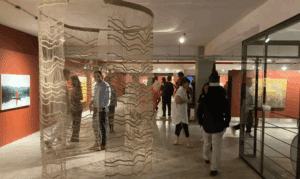
Major international exhibitions are usually a public success, because of the unique opportunity they offer of contact with the work of artists who do not always have a significant presence of works in the country where the exhibition is to be shown. Some of these exhibitions can reach hundreds of thousands of visitors in a few months, as was the case with O Triunfo da Cor, which received 922,000 people in 2016 at the Centro Cultural Banco do Brasil in Rio de Janeiro and São Paulo, with 74 post-impressionist works from the Musée d’Orsay. But have you ever stopped to think how an art exhibition of this magnitude travels?
Shipping an art exhibition is an extremely complex logistics project that demands experience, technical knowledge, agility in decision making and the ability to establish an international network of partners ready to act along the whole route.
Planning begins with defining the route, including stopovers and any connections that may be needed. Another fundamental factor is the division of the cargo to balance the weight inside the aircraft – and this is where another important speciality comes in: the making of bespoke crates to hold the artworks in such a way that movement does not harm them.
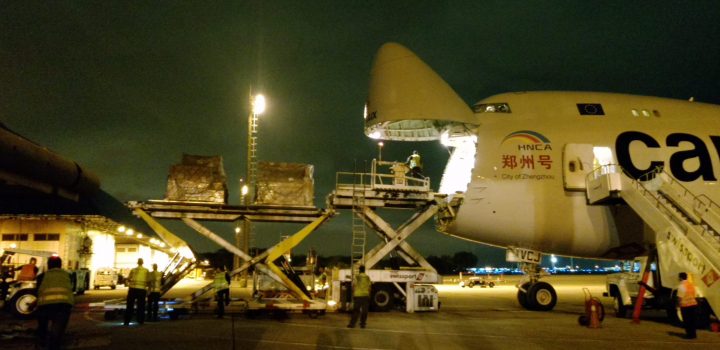
When the cargo is small and takes up little volume, commercial passenger flights can be used, but it often turns out to be necessary to charter cargo aircraft. For security reasons, works by the same artist or from the same museum never travel on a single flight; they are divided between at least two aircraft.
Another curious fact is that the artworks never travel alone. On each flight a specialist professional travels with them to supervise the whole transport process, from the place of origin to the departure airport; then from the arrival airport to the venue where the exhibition will take place. This is the courierwho accompanies the whole logistics operation from beginning to end, with the responsibility, among other things, of dealing with the customs authorities in the countries involved in the journey and of checking the condition reports for the artworks.
Sometimes an exhibition spends several years touring and may need to be housed in a specialist fine art store between one museum run and the next. This is what happened, for example, with the d’OSGEMEOS exhibition, which opened at the Pinacoteca de São Paulo and then went on to the Museu Oscar Niemeyer, in Curitiba. Before moving on to the Rio de Janeiro run, the whole collection was brought back to São Paulo and was stored at Clé Reserva Contemporânea for a few weeks.
Clé is the only private fine art storage facility in Brazil with international standards of security, climate control and fire prevention, and its clients include some of the most important museums in Brazil. All this technology is also available to private collectors, in bespoke services for the storage of a single object or of an entire collection. Discover our services.