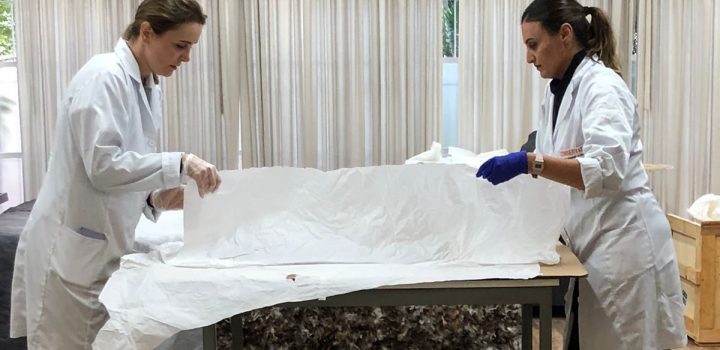
Drawing up a preventive conservation plan and regular monitoring by qualified professionals is the guarantee that artworks will be kept in their best condition. In this interview, the conservators Fernanda Perroni and Vivian Freire, partners at Conservare Conservação e Restauração de Obras de Arte, give some valuable guidance for collectors.
One of the examples they use is the comparison with ordinary furniture – just as a table that is not cleaned accumulates dust on its surface, the same happens with an artwork. They also state that the right place for storing or displaying works is of vital importance to the good life of the collection. Read it in full:
What are the main precautions a collector needs to take in order to conserve their works and ensure they stay in good condition?
The most important thing is to have a preventive conservation plan guided by a conservator-restorer, with regular monitoring. Preventive conservation involves a number of actions needed to keep a collection in a good state of conservation, such as diagnoses, regular cleaning, guidance on storage and display, and monitoring so that any corrective actions that arise over time can be taken.
What are the most common mistakes?
Just like other goods we buy – such as a car, household appliances, furniture and so on – artworks also need cleaning care and a suitable environment in order to minimise the effects of time and other possible incidents.
Some vivid examples we give our clients to make it easier to understand: “imagine you have a small side table and that for two months you do not clean it; you will notice the amount of dust that will have built up on it. This also happens with artworks”.
“Leave a sofa under a window that lets in a lot of light/sun. After a while the fabric will be faded”.
In the end, the most common mistake is that after the purchase and installation/storage of the work, no maintenance and monitoring care is provided. This is really important, as it can prevent a whole series of damage and extend the life of that work, avoiding interventions having to take place more often than they should.
How important is it to have a suitable place to store works, especially those that are not on display?
It is vital, because the environment is one of the key points for the conservation of artworks. There is no point in using the best storage materials, cleaning, installing correctly and taking every other precaution if the environment is inadequate, because the works will quickly start to show problems. One of the first steps when caring for a collection is the diagnosis of the storage/display environment so that corrective actions can be taken. There is no point in treating the works and then placing them in an unhealthy environment, which is why having a suitable environment is essential for the good upkeep of a collection.
When should a conservator be called in?
Ideally, when starting an art collection the collector should have the support of a conservator. They can provide assistance from the moment the work is received, with adapting the space to receive it, documentation, installation/storage and monitoring. Periodic preventive conservation is a key factor in keeping a collection in good condition and well cared for.
***
Clé Reserva Contemporânea is a private fine art storage facility with museum standards of climate control, security and fire prevention. It is a secure and highly qualified space for storing collections and artworks, whether for the long term or for short periods, as in the case of refurbishment works or changes to the items on display. Discover our storage options and get in touch to find the ideal solution for your collection.